Last updated: April 2026 · 8 min read
I killed my first mint plant within three weeks of bringing it home.
It sat on my kitchen counter, away from any window, and I watered it every other day like a dutiful plant parent. The leaves went pale. The stems grew long and spindly, reaching desperately toward the ceiling. Then, one morning, the whole thing just looked... defeated.
I thought I'd done something wrong with watering. Or the soil. Or maybe I just wasn't cut out for plants.
Turns out, I'd done everything right — except the one thing that mattered most: light.
The Problem Nobody Talks About With Indoor Mint
Mint has a reputation for being unkillable. "It grows like a weed," people say. And outdoors, that's true — mint spreads aggressively, takes over garden beds, and laughs at neglect.
But indoors? It's a completely different plant.
Indoors, mint is entirely dependent on you to provide what it would normally find outside. And the single biggest factor most people get wrong isn't watering, or fertilizer, or pot size.
It's light.
Specifically: mint needs 4–6 hours of direct or bright indirect sunlight per day. Most kitchen windowsills, especially north- or east-facing ones, don't come close to that.
What Light-Starved Mint Looks Like
Before I figured this out, my mint showed every classic sign of insufficient light. If you're seeing any of these, your plant is probably telling you the same thing:
Leggy, stretched stems. The plant grows tall but weak, with long gaps between leaf nodes. It's literally reaching for light it can't find.
Small, pale leaves. Healthy mint leaves are a rich, deep green. Light-starved leaves are small, washed out, almost yellowish.
Loss of scent. This one surprised me. Mint's fragrance comes from essential oils that the plant produces more of under bright light. Move it to a dim corner and that distinctive smell fades noticeably.
Slow or no new growth. The plant isn't dying dramatically — it's just barely surviving, putting out tiny new leaves at a sluggish pace.
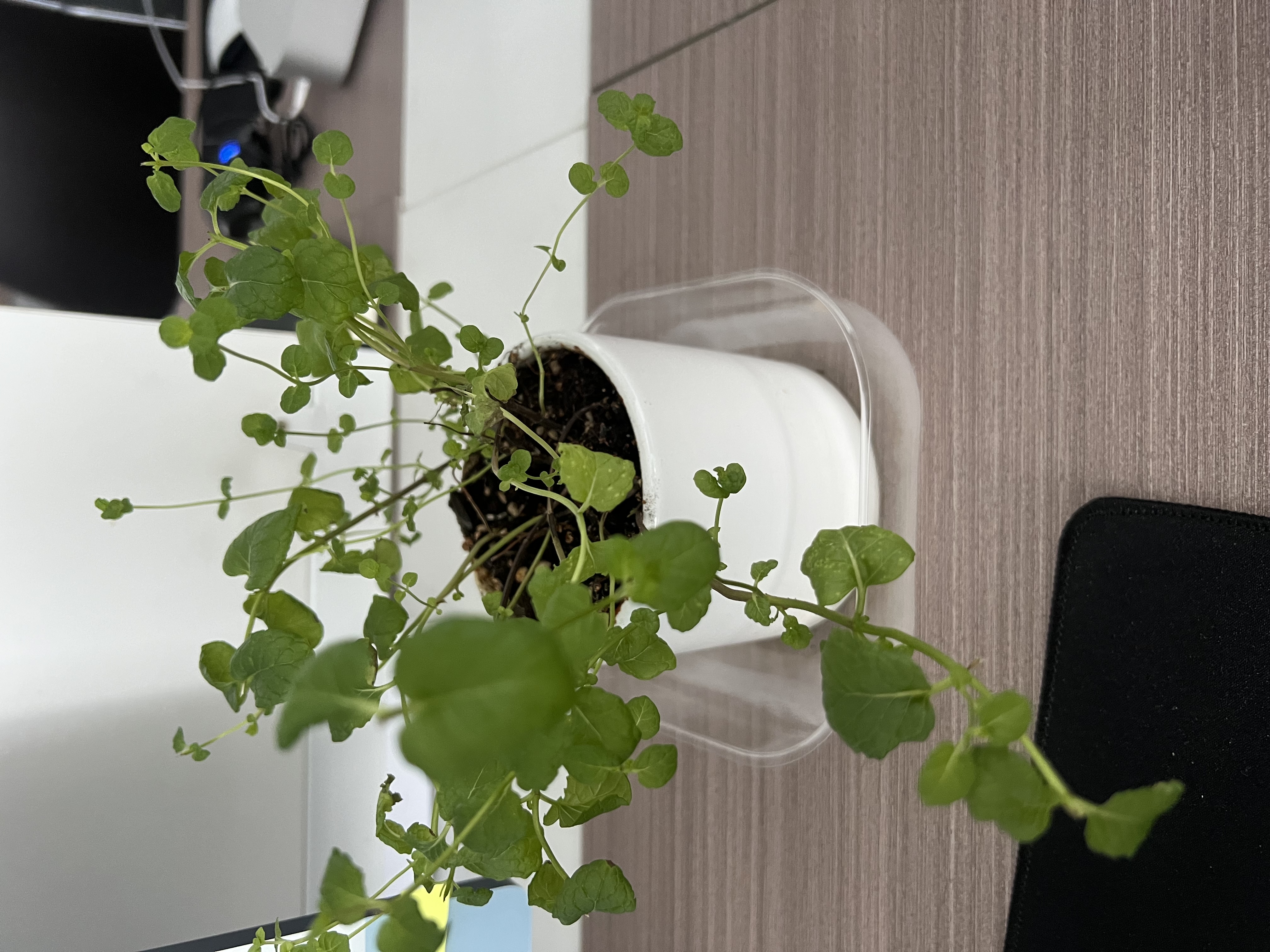
Looking at this photo now, the distress is obvious. At the time, I thought it just needed a bigger pot.
The Fix: Finding the Right Light Spot
Once I understood the problem, the solution was straightforward — but finding the right spot took some trial and error.
Step 1: Audit your windows
Walk around your home on a sunny afternoon and notice where light actually falls on surfaces. The brightest spots are your candidates.
A south-facing windowsill is usually ideal — it gets the longest duration of direct sun throughout the day. West-facing works well too, with strong afternoon light. East-facing gets gentle morning sun, which is usable but borderline for mint. North-facing is usually not enough on its own.
Step 2: Move the plant — and wait
I moved my mint to a south-facing windowsill in early February. Within about a week, I started seeing something I hadn't seen in months: new growth.
Not dramatic, Instagram-worthy transformation overnight. Just small, bright green leaves pushing out from nodes that had looked completely dormant. Then more. Then the stems started standing upright instead of flopping sideways.
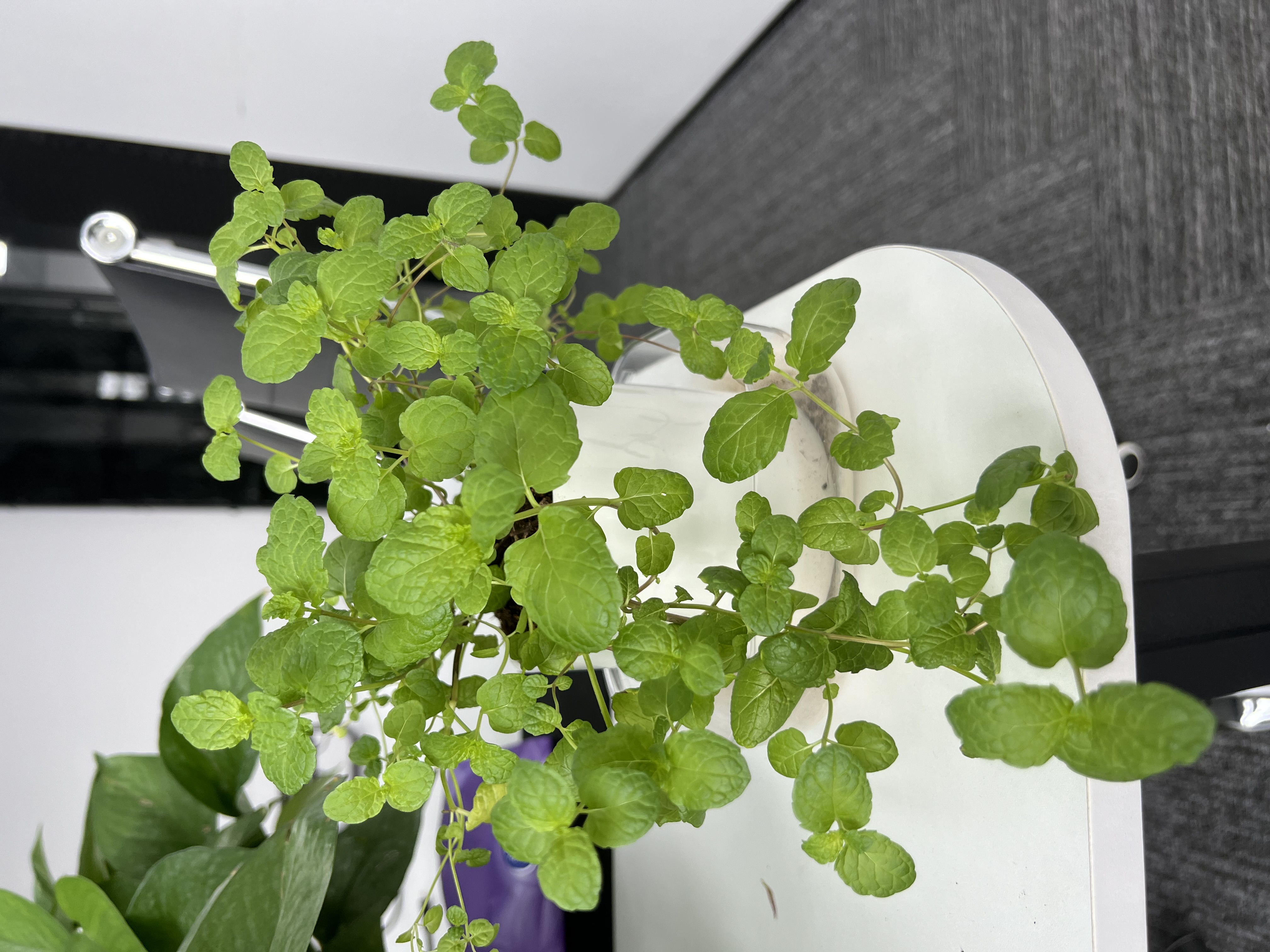
The difference wasn't a new pot, new soil, or any special fertilizer. Just light.
Step 3: If natural light isn't enough, grow lights work
I live in a northern city, and in winter, even my south-facing window gets maybe 3 hours of direct sun on a good day. So I supplemented with a basic grow light — nothing expensive, a $25 clip-on LED that sits about 6 inches above the plant for 4 hours in the evening.
The combination of whatever natural light I can offer plus the grow light has kept my mint thriving even through January.
The Complete Indoor Mint Care Guide
Light is the foundation, but once you've solved that, here's everything else:
Watering
Mint likes consistently moist soil — not wet, not bone dry. The classic test: stick your finger about an inch into the soil. If it feels dry, water thoroughly until it drains from the bottom. If it still feels damp, wait another day.
Overwatering is the second most common mistake after insufficient light. Signs of overwatering look a lot like underwatering — wilting, yellowing leaves — which is why it confuses people. The difference is in the soil: if the soil is damp and the plant looks sick, you're probably overwatering.
Pot and drainage
This matters more than most people realize. Mint in a pot without drainage holes will eventually develop root rot, no matter how carefully you water. If your pot doesn't drain, either repot it or place it inside a decorative outer pot without letting the plant sit in standing water.
A pot that's 6–8 inches wide is a good size for a single mint plant. Mint grows fast and will fill it quickly.
Soil
A well-draining potting mix works well. Mint doesn't need anything fancy — standard potting soil is fine. If you want to improve drainage, mix in about 20% perlite.
Avoid garden soil from outside. It compacts in pots and can introduce pests.
Temperature and humidity
Mint prefers temperatures between 65–75°F (18–24°C) — basically standard indoor temperatures. It doesn't love heat vents blowing directly on it, and it dislikes cold drafts near windows in winter.
Humidity isn't usually a big issue with mint the way it is with tropical plants.
Feeding
Mint isn't a heavy feeder. A balanced liquid fertilizer at half strength, once a month during the growing season (spring through fall), is plenty. In winter, you can skip feeding entirely.
Harvesting
Here's something that surprises new mint growers: harvesting makes the plant bushier. When you cut stems back, the plant branches out and fills in. A plant that never gets harvested tends to get leggy.
Cut stems back to just above a leaf node. Never take more than a third of the plant at once. Regular, moderate harvesting is better than occasional heavy cutting.
Why Mint Suddenly Looks Sick: Common Problems Diagnosed
Even with good light and proper care, mint can run into issues. Here are the most common ones:
Yellowing leaves with wet soil → overwatering / root rot. Let the soil dry out more between waterings. If you suspect root rot, unpot the plant and check the roots — healthy roots are white or light tan, rotted roots are brown and mushy. Trim the affected roots and repot in fresh soil.
Yellowing leaves with dry soil → underwatering or nutrient deficiency. Water more consistently, and consider a light feeding if it's been several months since you last fertilized.
White powdery coating on leaves → powdery mildew. Usually caused by poor air circulation combined with high humidity. Improve airflow around the plant, remove affected leaves, and treat with a diluted neem oil spray.
Tiny webbing under leaves, leaves looking stippled → spider mites. Common in dry indoor air. Increase humidity, wipe down leaves with a damp cloth, and treat with insecticidal soap if the infestation is significant.
Brown, crispy leaf edges → too much direct sun or underwatering. Yes, you can give mint too much direct afternoon sun, especially through glass in summer. Move it back slightly or add a sheer curtain.
How to Know When Something's Wrong (And What to Do)
The tricky thing about plant problems is that different issues can look almost identical. Yellowing leaves could mean overwatering, underwatering, nutrient deficiency, or pests. Wilting could mean underwatering or root rot. Without knowing what you're specifically dealing with, you can easily treat the wrong problem and make things worse.
This is exactly the kind of diagnostic challenge that Botanica was built for. Upload a photo of your mint and describe what you're seeing — Botanica analyzes the symptoms, considers your environment, and gives you a specific diagnosis along with a step-by-step treatment plan.
If my mint had been miserable for weeks before I figured out the light problem, a tool like this would have saved me a lot of guessing. Try a free diagnosis on Botanica →
The Short Version
If your indoor mint is struggling, start with light. Move it to your brightest window. If you don't have a bright enough spot, a cheap grow light will genuinely make a difference.
Everything else — watering, soil, fertilizer — matters, but none of it compensates for a plant that's slowly starving for light.
Fix the light first, then fine-tune the rest.
Have a mint that's not bouncing back even after you've adjusted its light? It might be something else going on. Get a diagnosis on Botanica — describe your symptoms or upload a photo and find out exactly what's wrong.